
Knee pain has a way of sneaking into every part of your day. It shows up when you climb stairs, get out of the car, or try to enjoy a walk around the neighborhood. For many people here in Goose Creek, SC, knee pain doesn’t just cause discomfort — it becomes a barrier to living the active, fulfilling life they deserve. And what most people don’t realize is that knee pain rarely exists in isolation. More often than not, it connects back to how your entire body is moving, aligned, and functioning — including your lower back, neck, and head.
What Is Knee Pain, Really?
Knee pain is discomfort, stiffness, swelling, or reduced range of motion in or around the knee joint. It can stem from injury, overuse, poor alignment, or underlying musculoskeletal imbalances — and it often affects how the rest of your body compensates, leading to secondary issues in the lower back, hips, and neck.
What Causes Knee Pain?
The knee is one of the most complex joints in the human body. It bears the weight of everything above it, absorbs impact from every step you take, and coordinates motion between the hip and ankle. When something goes wrong — whether from a sudden injury or years of wear and gradual misalignment — the result can be significant pain and loss of function.
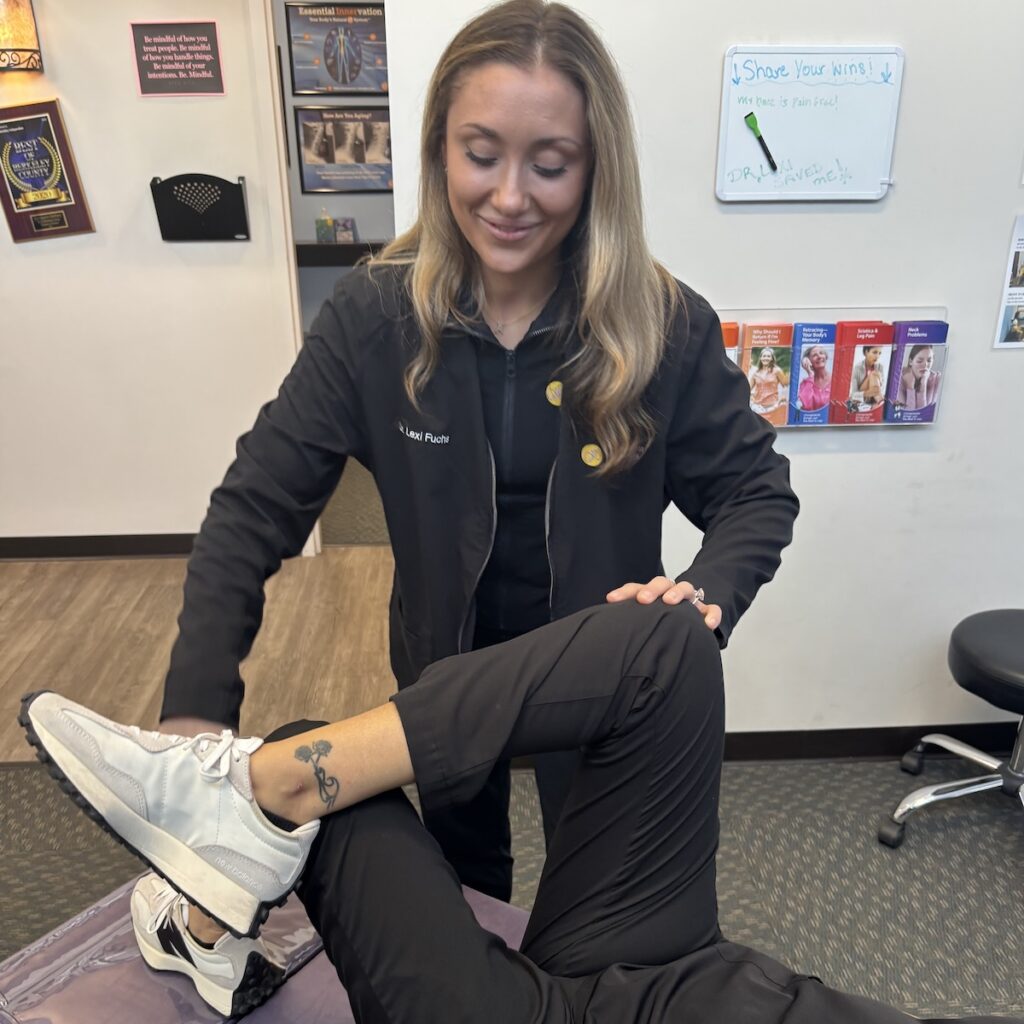
Common contributors to knee pain include muscle imbalances, poor hip alignment, flat feet, previous injuries that never fully healed, and repetitive stress from daily activity. Osteoarthritis is another frequent culprit, particularly in adults over 40. In active individuals, conditions like patellar tendinitis, IT band syndrome, and meniscus irritation are also common complaints our team at Kirar Superior Healthcare sees regularly.
What makes knee pain particularly tricky is that the source of the problem isn’t always at the knee itself. The knee is a hinge joint — it’s sandwiched between the hip above and the ankle below. When either of those areas isn’t functioning well, the knee often takes the brunt of the strain. Similarly, spinal misalignment can alter the way weight is distributed through the legs, placing uneven stress on one or both knees over time.
This is precisely why a whole-body evaluation matters. At Kirar Superior Healthcare, our team looks at the full picture — not just where it hurts.
The Connection Between Knee Pain and Your Spine
Here’s something that surprises many patients: the nerves that control sensation and motor function in your knee actually originate in your lumbar spine — specifically around the L3 and L4 vertebral levels. When there’s a misalignment or irritation in the lower back, nerve signals to the knee can be disrupted. This can contribute to weakness, altered sensation, or even pain that feels like it’s coming from the knee when the real source is higher up.
This is part of what the 100 Year Lifestyle philosophy recognizes so well — that the body is an interconnected system, not a collection of isolated parts. When you adopt a lifestyle perspective on health, you stop chasing symptoms and start addressing root causes. Dr. Vance Kirar and the team at Kirar Superior Healthcare embrace this philosophy fully. Their goal isn’t just to reduce your knee pain today, but to help you build the kind of body that keeps you moving well for decades to come.
Spinal alignment directly influences your posture, your gait, and how evenly your body distributes load with every step. A spine that’s functioning well helps your knees do their job without taking on excess strain. A spine that’s misaligned does the opposite — and over months and years, that cumulative stress adds up.
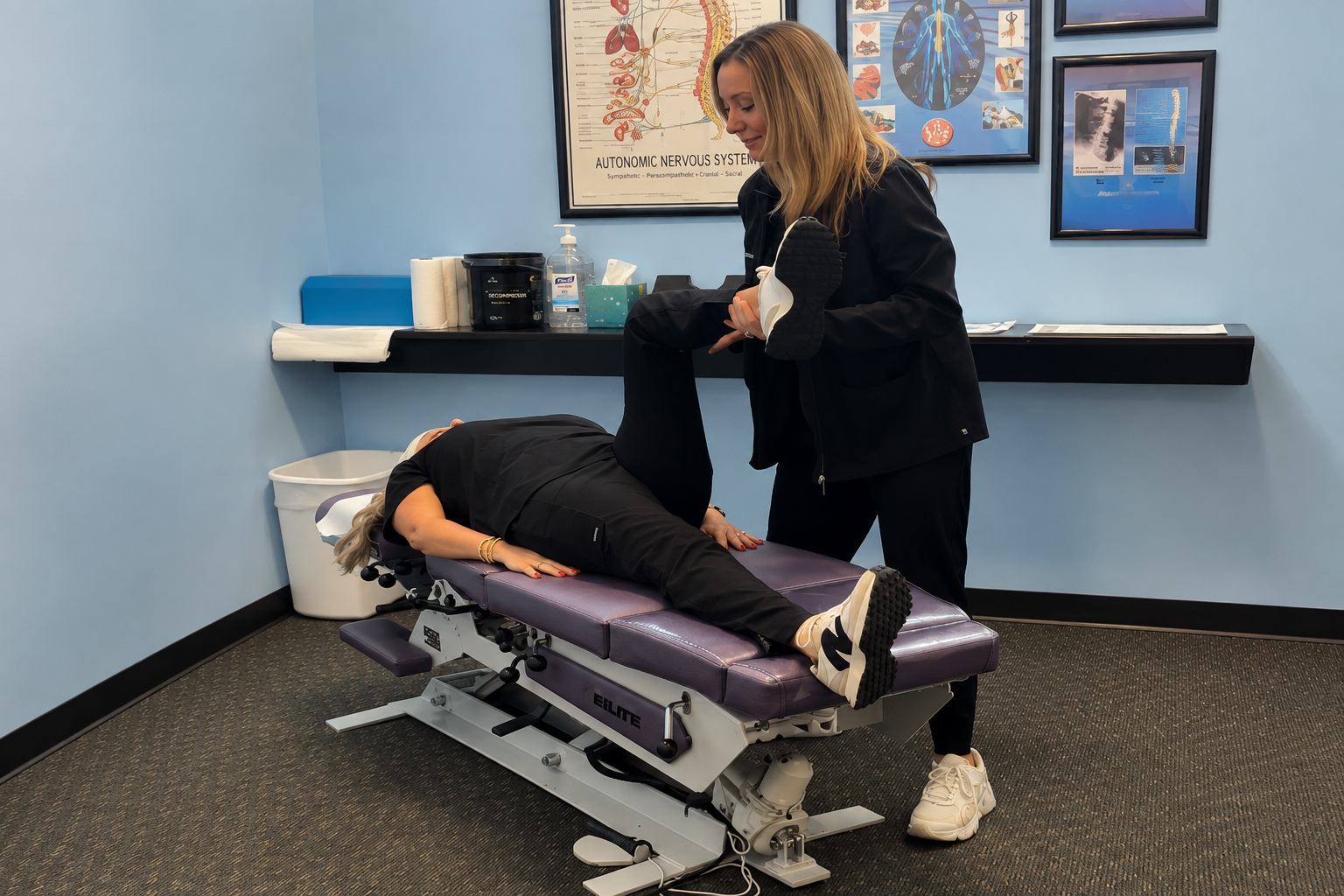
How Knee Pain Leads to Lower Back Pain, Headaches, and Neck Pain
When your knee hurts, your body is remarkably adaptive. It will shift weight, alter your stride, and compensate in any way it can to keep you moving. This is a survival mechanism — and it works beautifully in the short term. But over time, those compensations create new problems throughout the entire musculoskeletal chain.
One of the most common places those compensations land is in the lower back. When you favor one leg due to knee pain, you often tilt your pelvis unevenly. That tilt puts asymmetrical stress on the lumbar vertebrae and the surrounding muscles. Lower back pain often follows — sometimes quietly, building in the background until it becomes impossible to ignore. Research from the field of musculoskeletal medicine consistently supports the idea that lower extremity pain and low back pain frequently co-occur and reinforce each other.
The chain doesn’t stop at the lower back. An altered gait also changes how you carry your upper body. You may hunch forward slightly, round your shoulders, or extend your neck in an effort to stay balanced. Over time, this posture strains the cervical spine — the seven vertebrae of your neck. Neck pain becomes a secondary consequence of something that started at your knee. Muscle tension, stiffness, and reduced neck mobility are all common downstream effects that the team at Kirar Superior Healthcare regularly addresses in patients who initially came in for knee or back concerns.
And then there are headaches. Tension headaches and cervicogenic headaches — those that originate from the neck — are strongly associated with poor cervical posture and muscle tension. When the neck muscles are working overtime to hold up a head that’s displaced forward due to compensation patterns, headaches can become a nearly daily occurrence. What started as knee pain has now created a cascade that affects your entire quality of life.
This is exactly why the 100 Year Lifestyle approach to care is so valuable. Rather than treating each symptom separately, you address the whole system. You think in terms of long-term function, not short-term relief. And you take proactive steps to ensure that one problem doesn’t silently multiply into five.
How Chiropractic Care Fits In
Chiropractic care is one of the most effective conservative, drug-free approaches for managing musculoskeletal pain — including knee pain, lower back pain, neck pain, and headaches. Evidence from organizations like the National Institutes of Health (NIH) and the American College of Physicians (ACP) supports spinal manipulation as a first-line recommendation for certain types of musculoskeletal pain, particularly in the spine.
At Kirar Superior Healthcare in Goose Creek, SC, care begins with a thorough evaluation. On your first visit, we will take X-rays if needed — because understanding the structural picture from the very start allows our team to build a care plan that’s precise, personalized, and grounded in what’s actually happening in your body. This isn’t guesswork. It’s intentional, evidence-informed care.
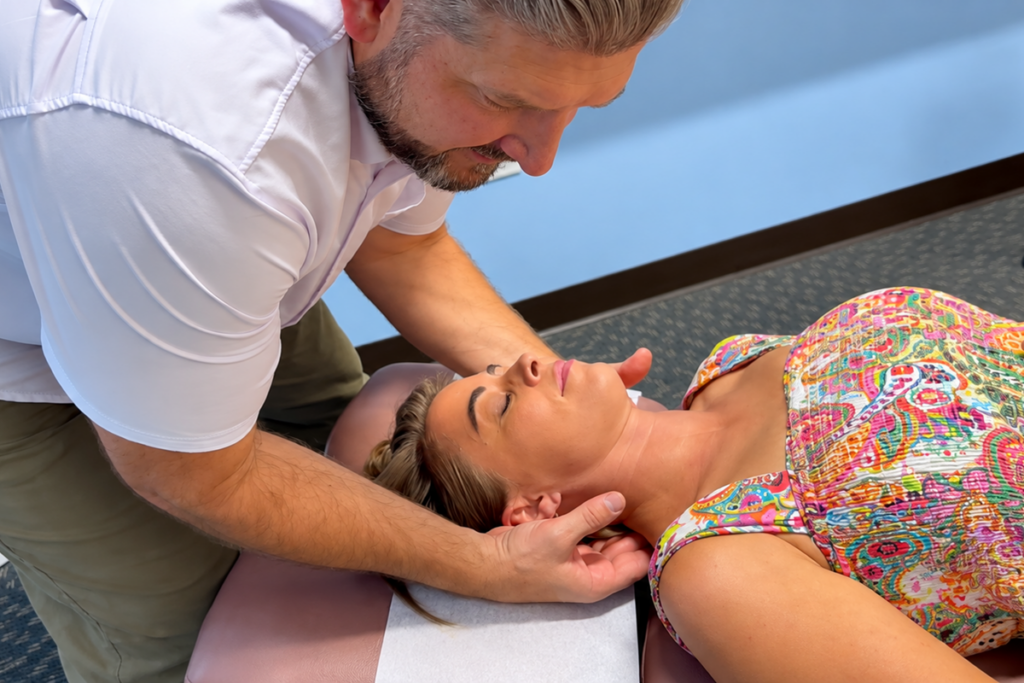
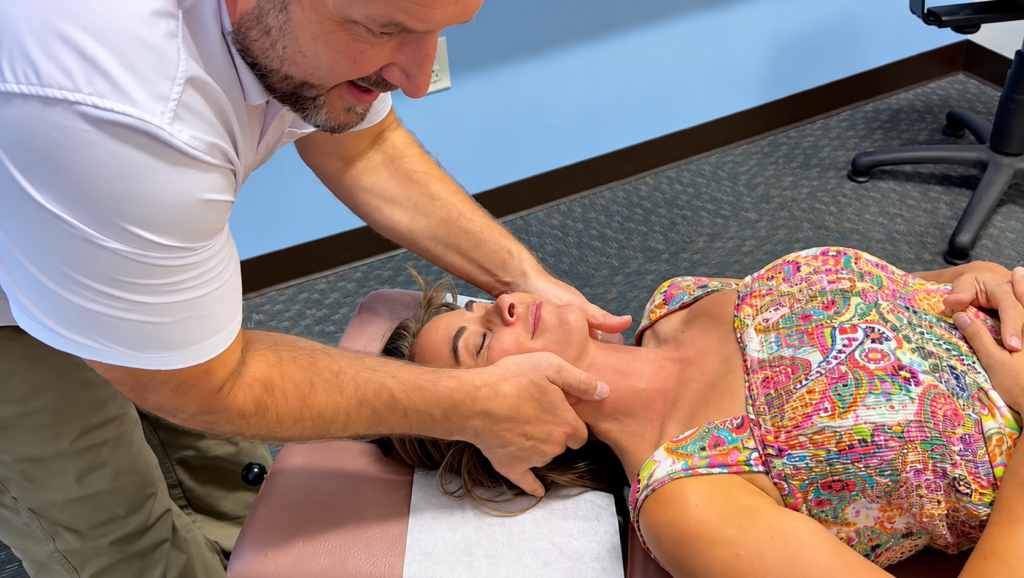
Chiropractic adjustments to the lumbar spine can help restore proper alignment, reduce nerve irritation, and improve the mechanical function that directly impacts how your knees bear weight. Adjustments to the cervical spine can relieve tension headaches and neck stiffness that have developed as compensatory patterns. Soft tissue work, rehabilitative exercises, and movement coaching all play a role as well.
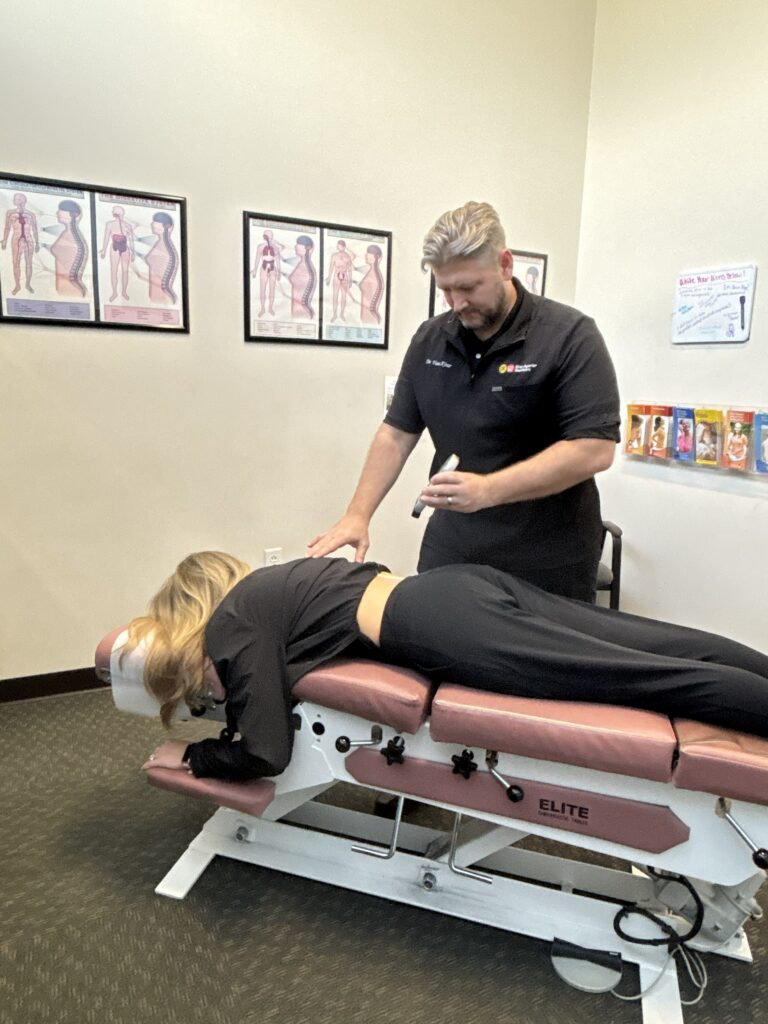
For patients dealing with lower back pain as a result of altered mechanics, spinal decompression therapy is one of the most powerful tools available. It gently creates space between compressed vertebrae, relieving pressure on discs and nerves. If you’re curious about how spinal decompression can help relieve the lower back pain that so often accompanies chronic knee problems, the video below gives an excellent overview of what this therapy involves and why it works.
The care at Kirar Superior Healthcare isn’t designed to keep you coming back indefinitely. It’s designed to help you build the kind of strong, resilient, well-aligned body that the 100 Year Lifestyle is all about — one that keeps you active, independent, and pain-free for the long haul.
Practical Tips to Support Your Knees and Your Whole Body
There’s a lot you can do between chiropractic visits to support your body and reduce the strain on your knees, lower back, and neck. Small, consistent habits make an enormous difference over time.
First, pay attention to your footwear. Supportive shoes that fit well and provide adequate arch support can dramatically reduce the stress your knees and lower back absorb with every step. Worn-out shoes — especially if they break down unevenly — can quietly worsen alignment and accelerate joint stress. Our team often recommends patients check their shoe wear patterns as a simple but meaningful first step.
Second, think about how you sit. Many people in Goose Creek spend hours at a desk each day. When you sit with your knees lower than your hips, your pelvis tilts forward and your lumbar curve flattens. This places strain on the lower back and can tighten the hip flexors, which in turn affects knee mechanics. Adjust your seat height, use lumbar support, and take frequent movement breaks throughout the day.
Third, stay hydrated and maintain a healthy body weight. Every extra pound of body weight adds roughly four pounds of additional stress to the knee joint during walking. Reducing that load through good nutrition and consistent movement is one of the most effective things you can do for long-term joint health. This aligns beautifully with the 100 Year Lifestyle principle that everyday choices compound over a lifetime — for better or for worse.
Finally, strengthen your hips and core. Weakness in the glutes and core muscles forces the knee to compensate. Incorporating gentle exercises that target these areas — under the guidance of your chiropractor — can meaningfully reduce knee strain and improve whole-body stability.
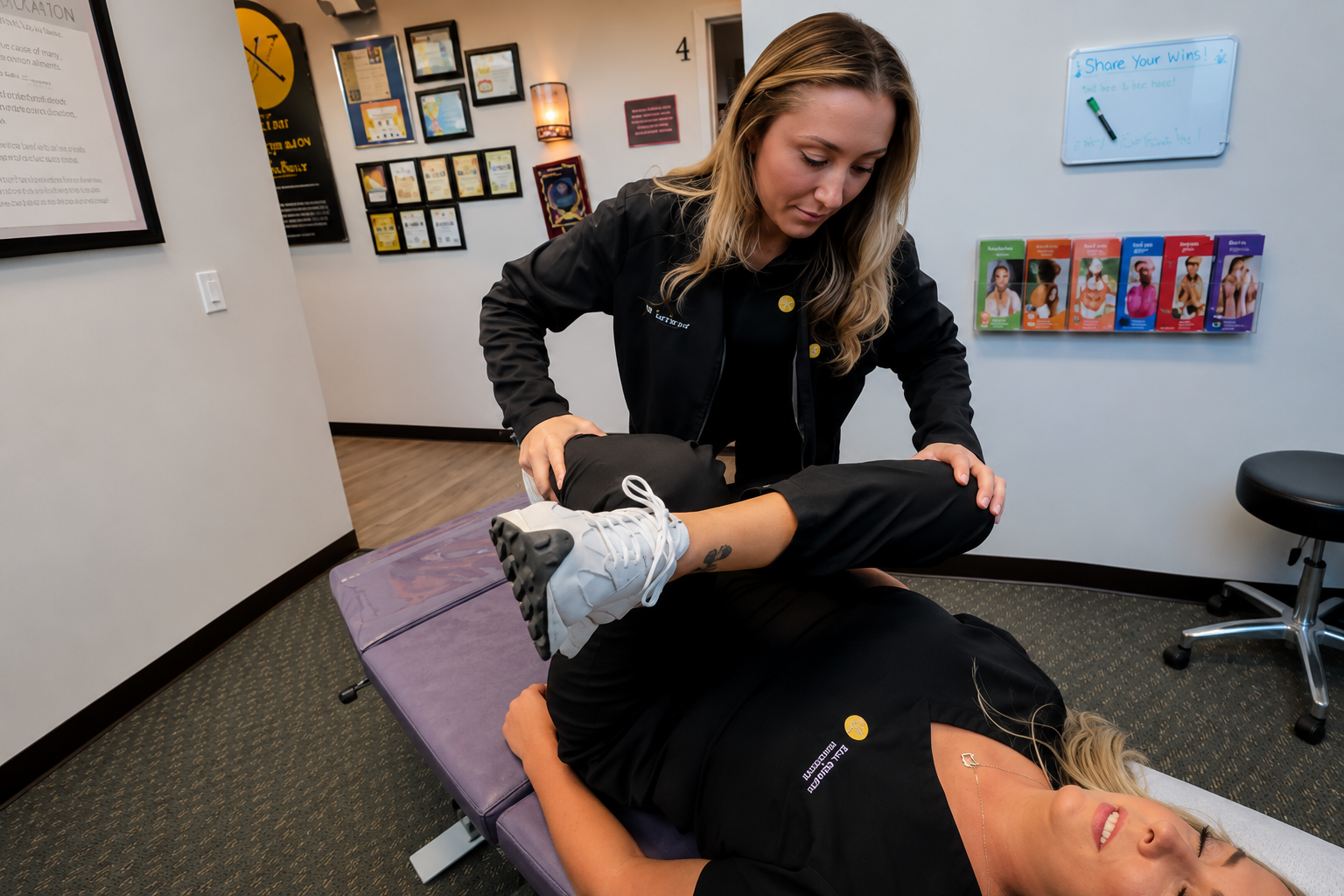
When to See a Chiropractor
If knee pain has been present for more than a few days, is limiting your daily activity, or is accompanied by secondary symptoms like lower back tightness, neck stiffness, or recurring headaches, it’s time to get a professional evaluation. These are signs that your body is compensating in ways that could lead to larger problems down the road.
Chiropractic care is generally a great fit for knee pain related to biomechanical dysfunction, muscular imbalance, poor posture, or spinal misalignment contributing to altered load distribution. It’s also appropriate for the lower back pain, neck pain, and headaches that often develop alongside chronic knee issues.
That said, there are situations that warrant prompt medical attention rather than — or in addition to — chiropractic care. Significant swelling or bruising following trauma, sudden inability to bear weight, a sensation that the knee is “giving out,” or pain accompanied by fever should be evaluated by your medical doctor immediately. Our team at Kirar Superior Healthcare will always be transparent about what we can help with and when a referral is the right call.
Comparing Common Approaches to Knee Pain
|
Approach |
Goal |
Addresses Root Cause? |
Drug-Free? |
Long-Term Lifestyle Focus? |
|---|---|---|---|---|
|
Chiropractic Care |
Restore alignment, reduce nerve irritation, improve mechanics |
Yes |
Yes |
Yes |
|
Over-the-Counter Pain Medication |
Temporary symptom relief |
No |
No |
No |
|
Physical Therapy |
Strengthen surrounding muscles and improve mobility |
Partially |
Yes |
Yes |
|
Corticosteroid Injections |
Reduce inflammation temporarily |
No |
No |
No |
|
Surgery |
Repair or replace damaged structures |
Sometimes |
No |
Depends on rehabilitation |
Myths vs. Facts About Knee Pain
Myth: Knee pain is just a normal part of getting older.
Fact: Age is a factor in joint health, but pain is not inevitable. Many adults in their 60s, 70s, and beyond live active, pain-free lives because they invest in their musculoskeletal health consistently. The 100 Year Lifestyle philosophy is built on this very idea — that your best decades can still be ahead of you when you take care of your body as a long-term asset.
Myth: Rest is always the best treatment for knee pain.
Fact: While acute injuries may require short-term rest, prolonged inactivity often worsens knee pain. Gentle, guided movement helps maintain circulation, reduce stiffness, and strengthen the muscles that support the knee. Our team at Kirar Superior Healthcare helps patients find the right balance between rest and therapeutic movement.
Myth: Knee pain only affects the knee.
Fact: As this article explains, knee pain frequently triggers compensatory patterns that lead to lower back pain, neck pain, and headaches. The body functions as a connected system — and treating knee pain in isolation often misses the bigger picture entirely.
Myth: Chiropractic care is only for back pain.
Fact: While chiropractic care is widely known for treating spinal conditions, it addresses the entire musculoskeletal system. Chiropractors are trained to evaluate and support joints, muscles, and nerves throughout the body — including the knees, hips, and extremities.
Myth: If imaging doesn’t show anything serious, the pain isn’t real.
Fact: Many functional and mechanical issues that cause significant pain don’t show up clearly on standard imaging. A thorough clinical examination — including postural analysis, movement assessment, and a detailed health history — often reveals patterns that explain pain even when imaging appears unremarkable.
Final Thoughts from Kirar Superior Healthcare
If you’re living with knee pain in Goose Creek, SC, you don’t have to just push through it or accept it as your new normal. Knee pain is your body’s way of telling you that something in the system needs attention — and the sooner you listen, the better your long-term outcomes tend to be.
At Kirar Superior Healthcare, we believe in caring for the whole person, not just the symptom. Whether your concern is knee pain, lower back pain that developed as a result of compensating, neck stiffness, or headaches that seem to come out of nowhere, our team is here to help you understand what’s happening and what to do about it. Dr. Vance Kirar and our full care team are passionate about helping the Goose Creek community move better, feel better, and live longer — with quality of life that matches every year of that longevity.
That’s the heart of the 100 Year Lifestyle: making choices today that your future self will thank you for. Your knees, your spine, and your nervous system are all part of an extraordinary system that’s designed to carry you through a long, active life. Give that system the attention it deserves.
If you’re ready to stop letting knee pain hold you back, we’d love to be part of your journey toward better health. Kirar Superior Healthcare is here, right here in Goose Creek, ready to help.
Frequently Asked Questions
Can a chiropractor actually help with knee pain?
Yes. Chiropractors are trained to address musculoskeletal dysfunction throughout the body, including the knees. By evaluating alignment, nerve function, and movement patterns, chiropractic care can address contributing factors to knee pain — particularly when the root cause involves spinal misalignment or biomechanical imbalance.
Why does my knee hurt when my back seems fine?
Spinal misalignments don’t always produce obvious back pain right away. However, they can still affect how your nervous system controls the surrounding muscles and how your weight is distributed through your legs — both of which influence knee health. A full evaluation at Kirar Superior Healthcare can help identify these hidden connections.
What happens at my first visit to Kirar Superior Healthcare?
Your first visit includes a thorough health history review, postural and movement assessment, and a clinical examination. We will take X-rays on the first visit if needed so our team can see the structural picture clearly and build a care plan that’s specific to your situation.
How does knee pain cause headaches?
Knee pain changes how you walk and carry your body. Over time, this creates compensatory tension in the lower back and neck. When the cervical spine is strained, the muscles and joints in the neck can generate headaches — a pattern known as cervicogenic headaches. Addressing the full chain is key to lasting relief.
Is chiropractic care safe for people with arthritis in the knee?
Chiropractic care can be gentle and appropriate for many individuals with arthritis, though the specific approach will depend on the severity of the condition and the individual’s overall health. Our team will always tailor care to what is safe and beneficial for you personally.
How long does it take to see improvement?
This varies depending on the severity of the condition, how long it has been present, and the overall health of the individual. Some patients notice meaningful improvement within a few visits, while others with more complex or longstanding issues require a longer course of care. Our team will give you honest, realistic expectations based on your specific evaluation.
TL;DR Summary
-
Knee pain is rarely just a knee problem — it frequently connects to lower back pain, neck pain, and headaches through compensation patterns in the body.
-
Spinal misalignment can alter how weight is distributed through the knees and disrupt the nerve signals that control knee function.
-
Chiropractic care at Kirar Superior Healthcare in Goose Creek, SC addresses the full musculoskeletal system — not just the site of pain.
-
Practical habits like supportive footwear, ergonomic sitting, staying active, and strengthening your hips and core make a real difference in long-term joint health.
-
The 100 Year Lifestyle philosophy reminds us that consistent, proactive care is the foundation for living an active, pain-free life at every age.